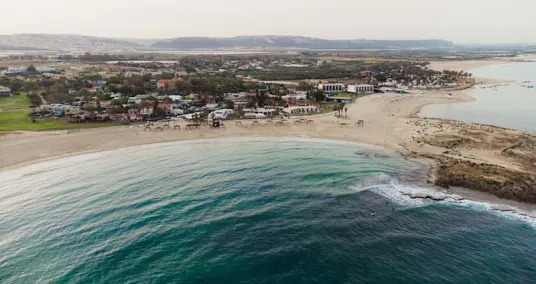
The discovery was made in an ancient shipwreck in the Dor Lagoon near the Carmel Coast, where archaeologists recovered nine pieces of unprocessed iron known as “blooms.”
Researchers from the University of Haifa said Wednesday that an underwater excavation off Israel’s northern Mediterranean coast uncovered what they described as the earliest known cargo of raw iron transported by ship, dating back around 2,600 years, Xinhua reported.
The discovery was made in an ancient shipwreck in the Dor Lagoon near the Carmel Coast, where archaeologists recovered nine pieces of unprocessed iron known as “blooms.” According to the university, the find provides direct evidence of how iron was transported in its earliest commercial stages.
The material was preserved in its original form, having solidified directly in a smelting furnace without undergoing forging or further refinement. Researchers said this distinguishes the cargo from later iron artifacts that typically show signs of shaping or tool-making.
Unlike copper and bronze, which could be melted into liquid form in ancient production processes, iron was heated with charcoal to produce a solid, porous mass. That mass was generally hammered to remove impurities and create denser material suitable for tools and implements.
The recovered blooms showed no indication of that secondary processing stage, suggesting they were transported immediately after production.

Earliest iron shipment discovered in ancient Mediterranean wreck
To determine the age and condition of the cargo, researchers conducted microscopic and chemical analyses.
Radiocarbon dating was also carried out on charred wood embedded in one of the pieces, helping confirm the timeline of the shipment. The findings were published in the journal Heritage Science.
Researchers said the cargo indicates that iron was being moved in raw form from production sites to other locations for further processing, pointing to a level of specialization in ancient manufacturing and trade networks in the Mediterranean.
The University of Haifa said the discovery provides new insight into early iron production and distribution practices in the region.
LATEST POSTS
- 1
 A mom stopped giving her kids snacks — and sparked a debate about eating habits
 - 221 Incredibly Entertaining Contemplations To Observe Consistently
- 3Discovering a sense of harmony: Individual Accounts of Reflection and Care
- 4Crypto Investor’s Family Tied Up and Beaten by Armed Gangs in Their Home
- 51st-ever disease gene fix, Alzheimer's blood test: 7 medical breakthroughs in 2025




- Fetterman says he's back home after a fall put the Pennsylvania senator in the hospital
- Why the UAE has incurred the wrath of Somalia
- 6 Exemplary Mexican Dishes
- The powerful new Rubin Observatory just found 11,000 new asteroids and measured 'tens of thousands more'
- Which European palace do you fantasy about visiting? Vote!
- How Google, Microsoft, Walmart, and other corporate giants are preparing for an aging workforce
- America's Confided in Fridge in 2024
- Watch South Korean startup Innospace attempt its 1st-ever orbital launch today
- 6 Popular Men's Aromas On the planet