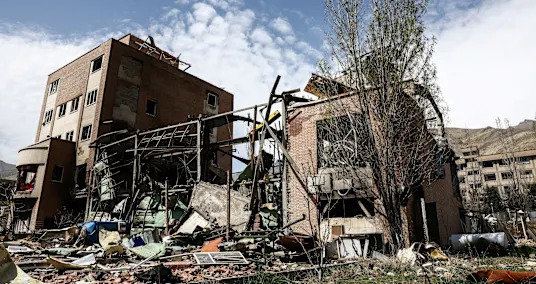
In Tehran, a city of nine million people, schools are closed, businesses are shuttered or struggling, and locals are living without a functioning air-raid warning system or public shelters. In many areas, the first sign of an incoming strike is the explosion itself.
There have been twice as many US and Israeli attacks on Iran compared to the number of Iranian retaliatory strikes since the war began — and the numbers killed in Iran have been orders of magnitude greater than in the neighboring Gulf states. A nationwide internet blackout, now entering its second month, has left civilians unable to access information about safety, shelter, and food and has meant some are unable to work. But while millions have fled Iran’s cities, many more are staying where they are. Some residents are hoping the US and Israeli bombs will cause the regime to collapse; others are left wondering if they are at risk if their neighbors are targeted.
For the many Iranians with ties to Dubai, there are other pressures, with Iranian nationals now barred from entering or transiting through the UAE. Residency permits, even for those with long-term Golden Visas, are reportedly being revoked without notice.

LATEST POSTS
- 1
 Indian rocket launches record-breaking BlueBird 6 smartphone satellite to orbit (video)
 - 2Israeli naval intelligence reduces Iranian threat to Strait of Hormuz
- 3Journalists killed by Israeli strike in southern Lebanon
- 4How to watch the ‘Wicked: One Wonderful Night’ special — now streaming
- 521 Things You Ought to Never Share with Your Childless Companion




- Fossil analysis changes what paleontologists know about how long T. rex took to grow full size
- 2024 Watch Gathering: The Best Watches of the Year
- Investigating the Advantages of a Bank account: A Complete Aide
- Eurasian cargo hub expands to capture Europe-Asia freight flows
- Climate leaders are talking about 'overshoot' into warming danger zone. Here's what it means
- Josh Duhamel's secret to the good life at 53? Wolverine peptides, ditching Hollywood and having another baby.
- Vote In favor of Your Favored Occasion Arranging Administration
- Europe must reinvent warfare for ‘era of shocks,’ NATO’s Vandier says
- Weeks-Long Australian LNG Outage Will Further Tighten Supply